Paddy Power Announces Closure of Up to 100 Betting Shops Across UK and Ireland
Parker Weber · Sep 3, 2026

Paddy Power Announces Closure of Up to 100 Betting Shops Across UK and Ireland
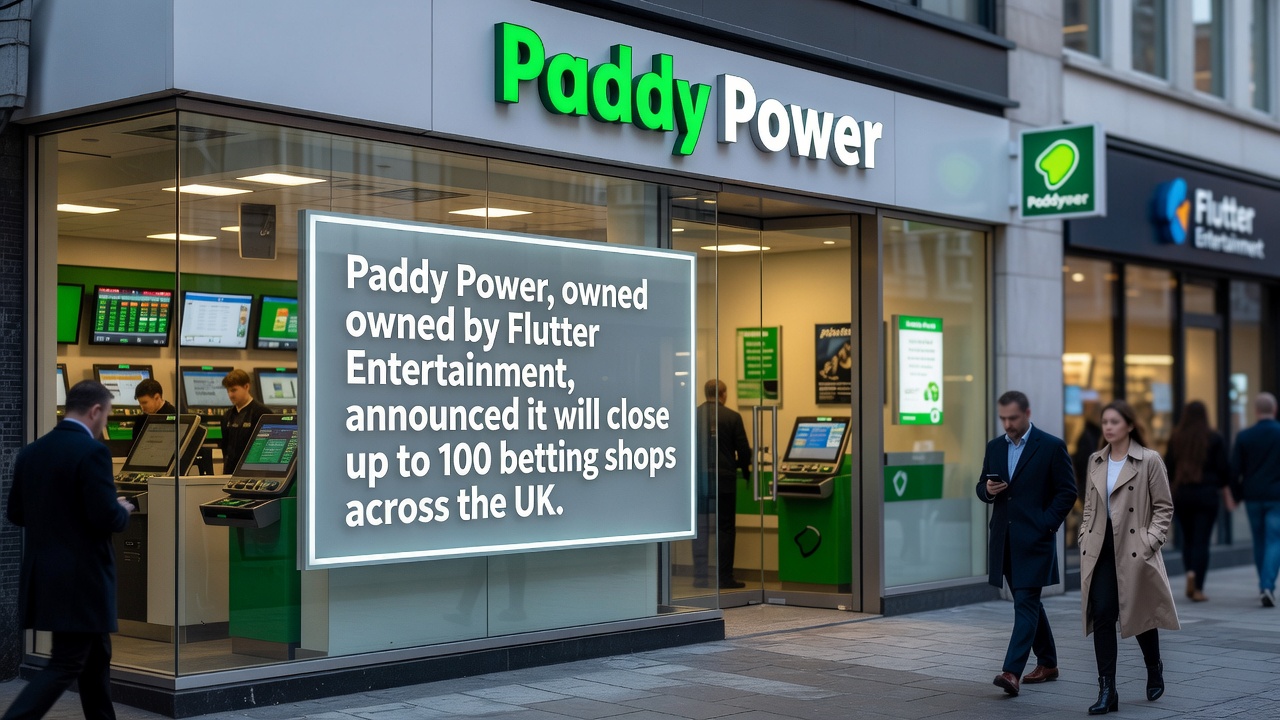
Paddy Power, a brand under Flutter Entertainment, confirmed plans to close up to 100 betting shops in the UK and Ireland by the end of the year, a step that affects roughly a fifth of its retail locations and places about 400 jobs at risk of redundancy. The decision comes amid ongoing pressures on high-street retail operations, where rising energy costs, rents, and business rates combine with increased gambling taxes introduced in the previous UK budget. Those taxes include a near-doubling of remote gaming duty, which has added to operational challenges for companies that maintain both physical and online offerings.Details of the Announced Closures
The closures target a specific portion of the estate and follow a structured review of underperforming sites. Flutter Entertainment communicated the move through official channels, noting that affected staff will receive support packages during the redundancy process. Observers note that the timeline stretches through the final months of the year, allowing for phased implementation rather than sudden shutdowns at every location.
Industry figures show that these reductions align with broader adjustments across the betting sector. Paddy Power's retail footprint has faced sustained headwinds, and company statements emphasize cost management while preserving core operations in stronger markets. Data from recent financial disclosures indicate that retail revenue has declined in several regions, prompting the current round of adjustments.
Economic Factors Driving the Decision
Multiple cost increases have converged on high-street betting shops in recent periods. Energy prices remain elevated compared with pre-pandemic levels, while commercial rents and local authority rates continue to climb in many urban and suburban areas. The previous UK budget introduced higher gambling taxes, including the near-doubling of remote gaming duty, which affects operators that run both land-based and digital platforms. These combined elements create a tighter margin environment for retail outlets that already operate under competitive conditions.
According to Racing Post coverage, the tax changes have produced multi-million-pound impacts across the industry. Companies must absorb these duties while also managing day-to-day expenses that have risen steadily. Experts at trade associations have tracked similar patterns in other retail categories, where fixed costs have outpaced revenue growth in physical locations.
Comparisons with Competitor Announcements
Rival operators have issued parallel statements about shop reductions. Betfred outlined plans to close 132 locations, while William Hill and its parent company Evoke indicated hundreds of closures over a comparable timeframe. These moves reflect shared exposure to the same cost pressures, including the tax increases from the recent budget. Observers note that the collective scale of reductions points to structural shifts in how betting companies allocate resources between retail and online channels.
Each company has cited the same core issues: elevated operating expenses on the high street and the cumulative effect of duty changes. The pattern suggests coordinated responses to identical market signals rather than isolated corporate strategies. Figures released by industry bodies show that retail betting volumes have not recovered to earlier peaks in many regions, leaving operators to recalibrate their physical presence.
Implications for British Racing
The shop closures carry downstream effects for British racing through reduced contributions to the levy and media rights payments. Estimates place the potential shortfall in the multi-million-pound range, as fewer retail outlets translate into lower volumes of betting activity that feeds into racing funding mechanisms. Racing stakeholders have monitored these developments closely, because the levy system relies on a steady flow of contributions from licensed operators.
Those who have studied the funding model point out that media rights agreements also depend on retail betting turnover. When shops close, the associated betting activity drops, which in turn affects payments tied to racecourse coverage and data usage. The current round of closures adds to an existing trend that has seen gradual contraction in the retail segment over several years.
Timeline and Next Steps
Implementation of the closures will occur progressively through the remainder of the year. Flutter Entertainment has indicated that consultations with employees and relevant unions form part of the process, in line with standard employment practices. Local authorities and community groups in affected areas may also engage with the company regarding the transition of premises.
Company representatives have stated that remaining shops will continue to operate under revised performance targets. The focus shifts toward sites that maintain stronger footfall and revenue profiles, while digital platforms absorb a larger share of overall activity. This rebalancing reflects wider industry movement toward online channels that face different cost structures and regulatory requirements.
Conclusion
The announcement from Paddy Power forms part of a coordinated set of responses across major UK and Irish betting operators facing identical cost and tax pressures. Up to 100 closures, 400 jobs at risk, and the resulting effects on racing funding illustrate the scale of adjustment underway. As the process unfolds through the end of the year, the sector continues to navigate the balance between physical retail constraints and the growth of digital alternatives.